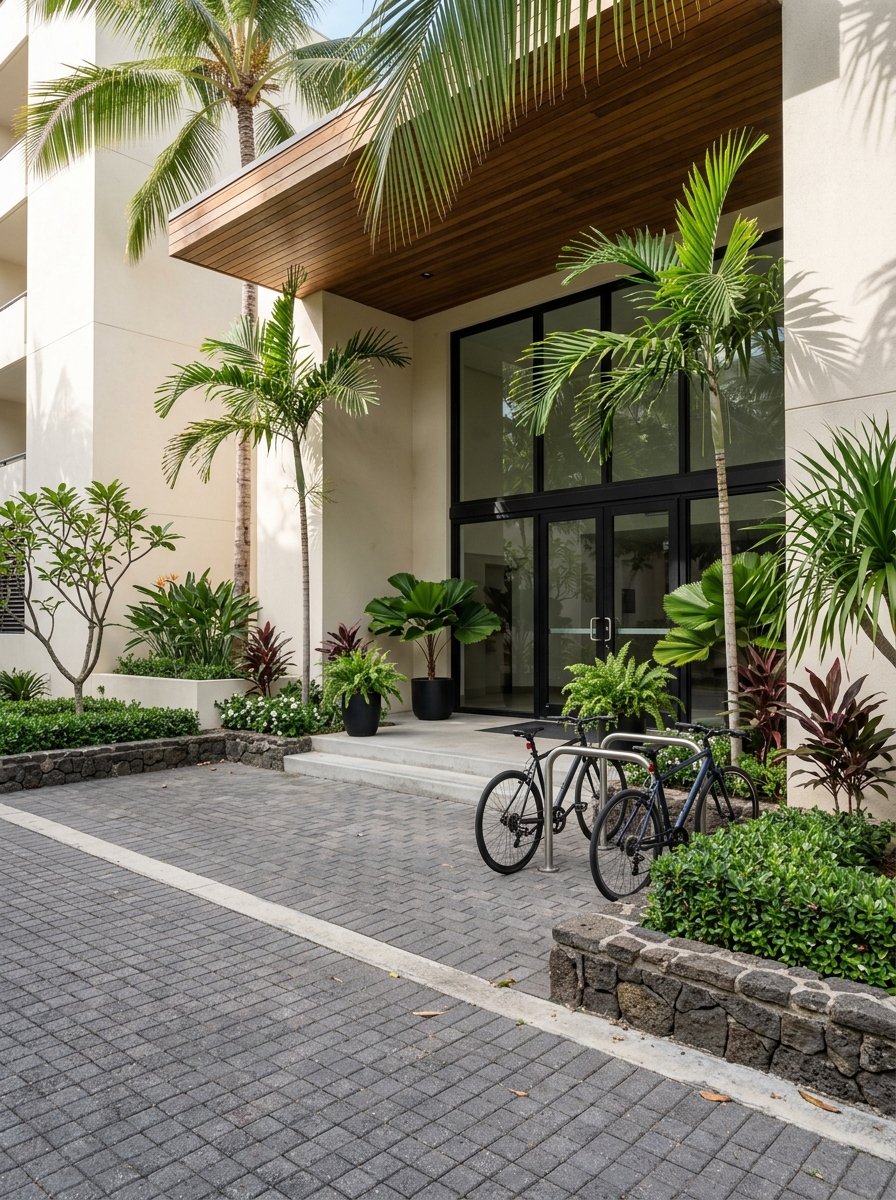
Wondering if you can really live in Waikiki without owning a car? If you are thinking about buying a condo here, that question matters more than ever because parking, commuting, and daily convenience can shape your budget and your lifestyle. The good news is that Waikiki is one of the strongest places on Oahu for car-light living, but the right answer depends on how and where you actually spend your time. Let’s dive in.
Waikiki Is Built for Short Trips
Waikiki works well without a car because many daily destinations sit close together. Walk Score rates Waikiki at 89 for walkability, 65 for transit, and 90 for biking, and ranks it as the third-most walkable neighborhood in Honolulu. That is a strong starting point if you want to handle errands, meals, beach time, and basic day-to-day movement on foot.
A City and County of Honolulu presentation also found that 86% of Waikiki residents are in low- or no-car households based on 2014 to 2018 ACS 5-year estimates. That does not mean every household is completely car-free, but it does show that car-optional living is already normal in the area. If your routine stays mostly in Honolulu’s urban core, Waikiki gives you a realistic shot at skipping the daily commute by car.
Walking Can Cover a Lot
In Waikiki, walkability is not just a score on a website. It is a practical part of daily life because so many common destinations are clustered together. That makes it easier to keep your routine simple and local.
For many residents, walking can handle trips like:
- Grocery and convenience runs
- Coffee shops and casual dining
- Beach access and park visits
- Basic personal services
- Quick meetups and errands
Biki’s Waikiki route materials also highlight trips around Kapiʻolani Park past the Honolulu Zoo, Waikiki Aquarium, and the Natatorium. That reinforces an important point: if your needs are concentrated in and around Waikiki, a lot of your movement can stay close to home.
Biking Adds More Flexibility
If walking covers the basics, biking can stretch your range without adding the cost of car ownership. HDOT’s Oʻahu bike map includes a dedicated Waikiki/Kahala detail map and uses color coding to distinguish routes that are more novice-friendly from those better suited to experienced bicyclists. That matters if you want to judge whether bike commuting will feel comfortable for your actual skill level.
Honolulu also has Biki, the local bikeshare system, which describes itself as a form of public transit for short trips around town. Waikiki has multiple Biki stations, including stops such as Paoa Place & Kalia Road and Kalakaua & Kaiulani. For a buyer thinking car-free, that can be a major convenience because you may not need to store, lock, or maintain your own bike for every trip.
The City’s longer-term planning also supports bike access. Honolulu requires bicycle parking in apartment, resort, and business districts, including all precincts of the Waikiki special district, for new development. For buyers, that is a useful signal that bicycle access is part of the area’s mobility planning.
TheBus Makes More Commutes Possible
A car-free lifestyle works best when public transit can back up walking and biking. In Waikiki, TheBus gives you that extra layer of flexibility. Current route materials show:
- Route 2 serving Waikiki, Diamond Head, KCC, and Kahala
- Route 13 serving Waikiki and UH Mānoa
- Route 42 serving Waikiki and Ewa Beach
That route mix can be especially helpful if your regular trips connect Waikiki with nearby parts of Honolulu rather than requiring frequent island-wide driving. TheBus also notes that Route 42 resumed service along Kalia Road on January 12, 2026, which is good to know if you are focused on the west end of Waikiki.
Airport Access Is Better Than Many Buyers Expect
One common concern with car-free living is getting to the airport. In Waikiki, that trip is more manageable than many people assume. Daniel K. Inouye International Airport lists ride-share apps, taxis, Skyline, and TheBus as airport access options.
The airport’s W Line runs between the airport and Waikiki, with weekday service about every 10 minutes at peak, 15 minutes off-peak, and 30 minutes after 7 p.m. If you travel often for work, family, or military-related moves, that kind of service pattern can make a real difference. You may still prefer a ride-share for some flights, but airport access does not automatically force you into car ownership.
Car Share Can Fill the Gaps
Even committed car-light households usually run into trips that are easier by car. That is where car share can make Waikiki more practical. Hui Car Share lists multiple Waikiki locations, including Discovery Bay, DoubleTree Waikiki, Hyatt Centric Waikiki Beach, Ilikai Hotel, International Market Place, Island Colony, King Kalakaua Plaza, Lotus Honolulu, Marina Parking Garage, Outrigger Waikiki Paradise Hotel, and Park Shore Waikiki Hotel.
Hui’s Waikiki information also says parking is free at its Waikiki location. That gives you a backup option for bigger errands, weekend plans, or appointments where transit would be less convenient. In real life, this is why Waikiki is best described as car-optional rather than car-free by default.
Condo Parking Is the Big Tradeoff
If you are buying in Waikiki, parking is one of the most important details to review before you make an offer. A 2024 City presentation on the Ala Wai Boulevard corridor estimated 6,320 public parking spaces in Waikiki and described the corridor as 95%+ occupied with low turnover. That tells you parking is limited enough to affect convenience and planning.
A Honolulu Transportation Demand Management plan reported that, as of 2021, smart-meter parking in Honolulu’s urban core plus Waikiki was $3 per hour, while off-street city lots ranged from $0.10 to $1.50 per hour depending on the facility. Those numbers do not mean every resident pays those rates daily, but they do show that parking has a real cost if your building setup does not fit your needs.
Not All Condo Parking Is the Same
In Waikiki condos, a “parking stall” can mean very different things from one building to another. Hawaii condominium law requires the declaration to include a parking plan, to the extent parking exists in the condominium property regime, showing the location, layout, and stall numbers. The law also defines limited common elements, which is the category many condo parking stalls fall under.
In plain terms, that means you need to verify whether parking is:
- Deeded to the unit
- Assigned to the unit
- Leased
- Rented separately
- Not included at all
This is one of the biggest practical due diligence items for Waikiki buyers. Two units may look similar online, but the parking setup can change the ownership experience quite a bit.
The Physical Stall Matters Too
The legal setup is only part of the story. DCCA sample public-report language points out that stalls can be compact, tandem, guest, or handicapped, and buyers are urged to inspect for pillars, walls, pipes, or other intrusions that can reduce usable space. That is especially important in Waikiki, where tighter building layouts are common.
If you do plan to keep a car, the right question is not just “Does this condo have parking?” The better question is “Will this specific stall work for the vehicle and lifestyle I actually have?” That small detail can become a daily frustration if you skip it.
When Car-Free Living Works Best
Waikiki tends to work best for buyers whose daily lives are concentrated in the urban core. If your routine mostly stays within Waikiki, Ala Moana, downtown, UH Mānoa, or the airport corridor, your chances of living comfortably with little or no car use go up. Walking, biking, TheBus, ride-share, and car share can combine into a workable system.
This setup can be especially appealing if you want to reduce monthly costs tied to parking, insurance, maintenance, and fuel. It can also make sense if you prefer a simpler lifestyle where many daily needs are close by. For the right buyer, that convenience is part of Waikiki’s value.
When a Car May Still Make Sense
Waikiki is not a perfect fit for every no-car plan. If your work or family routine regularly takes you across the island, the convenience tradeoff may feel bigger. The same is true if you have mobility needs, frequent bulky errands, or a schedule that depends on late-night or time-sensitive travel.
That does not mean Waikiki is the wrong choice. It just means you should match the neighborhood to your actual routine, not to an idealized version of car-free living. The goal is not to force the lifestyle. The goal is to choose a home that supports the way you live.
Questions to Ask Before You Buy
If you are serious about a Waikiki condo, a few practical questions can help you avoid surprises:
- Does the condo include a parking stall?
- If so, is the stall deeded, assigned, leased, or rented separately?
- Is the stall compact, tandem, or large enough for your vehicle?
- How close is the nearest TheBus stop?
- How close is the nearest Biki station?
- Are ride-share pickups easy at the building?
- Is there secure bike storage, and is it convenient enough to use daily?
- Is your commute mostly within Honolulu’s urban core, or does it regularly cross the island?
These questions can quickly tell you whether a unit supports a car-free, car-light, or car-dependent lifestyle.
The Bottom Line on Waikiki Living
Yes, you can absolutely skip the commute by car in Waikiki if your daily routine fits the neighborhood. The mix of strong walkability, useful transit, bikeshare access, and car-share backup makes Waikiki one of the most practical places on Oahu for a car-light lifestyle. Still, the best way to think about it is simple: Waikiki is car-optional, and that can be a major advantage if you buy with clear eyes about parking, location, and daily habits.
If you want help comparing Waikiki condos, reviewing parking details, or narrowing down buildings that fit the way you actually live, Don Dietz can help you make a practical, informed move.
FAQs
Can you live car-free in Waikiki full time?
- Yes, Waikiki can support full-time car-free living for many residents, especially if your routine stays within Honolulu’s urban core and you are comfortable using walking, biking, TheBus, and occasional ride-share or car share.
Is Waikiki a good neighborhood for walking and biking?
- Yes, Waikiki has strong walkability and biking conditions, with a Walk Score of 89 for walkability and 90 for biking, plus Biki stations and a dedicated Waikiki/Kahala bike map from HDOT.
Does TheBus connect Waikiki to other parts of Honolulu?
- Yes, current route materials show Route 2, Route 13, and Route 42 serving Waikiki with connections to places such as Diamond Head, KCC, Kahala, UH Mānoa, and Ewa Beach.
Can you get from Waikiki to the Honolulu airport without a car?
- Yes, the airport lists ride-share apps, taxis, Skyline, and TheBus as options, and the W Line runs between the airport and Waikiki with frequent weekday service.
Why is condo parking so important in Waikiki?
- Parking matters because public parking in Waikiki is heavily occupied, and condo parking rights can vary by building, with stalls that may be deeded, assigned, leased, rented separately, or not included.
What should condo buyers check about parking in Waikiki buildings?
- Buyers should verify the legal status of the stall, confirm the stall number and location, and inspect whether the space is compact, tandem, or affected by pillars, walls, pipes, or other intrusions.